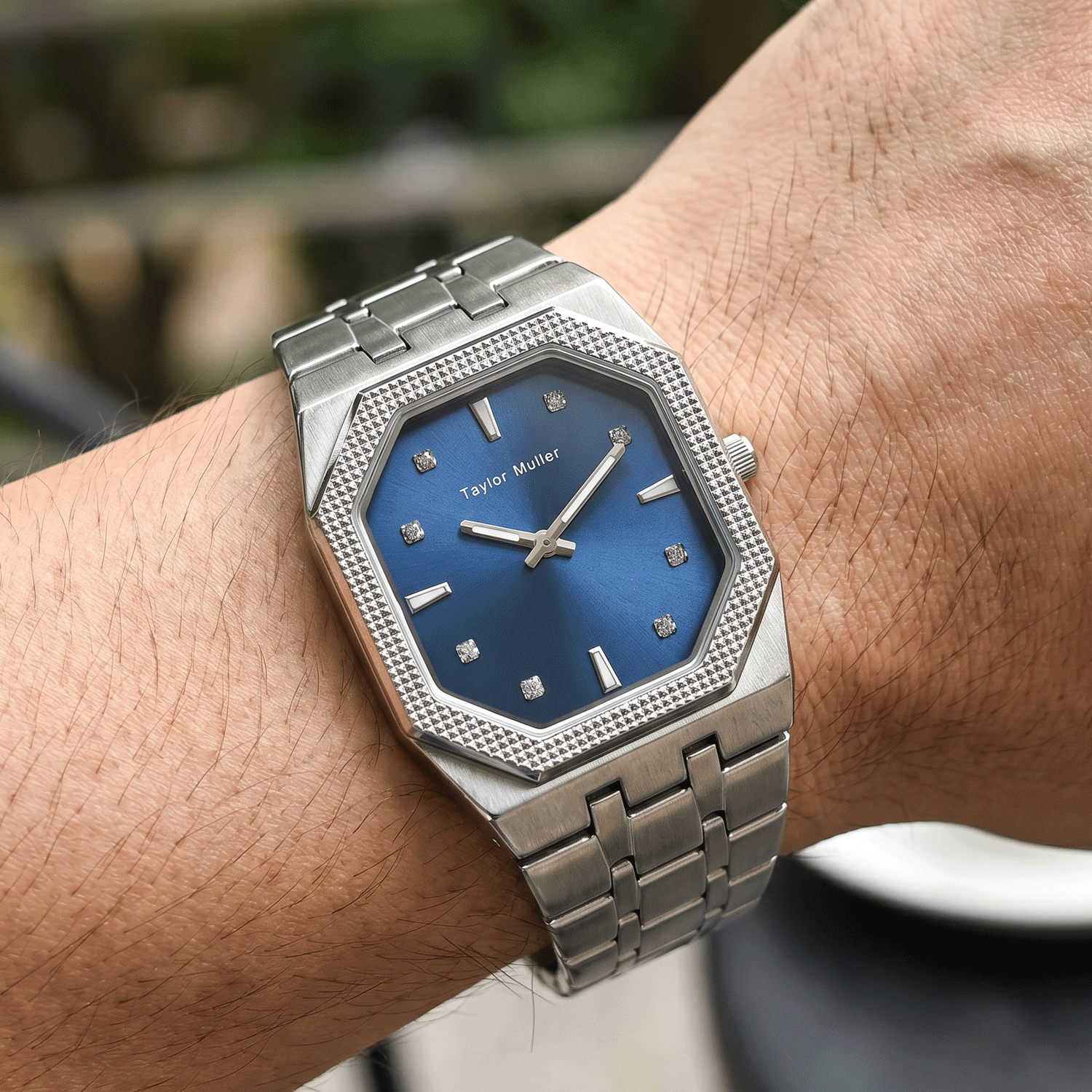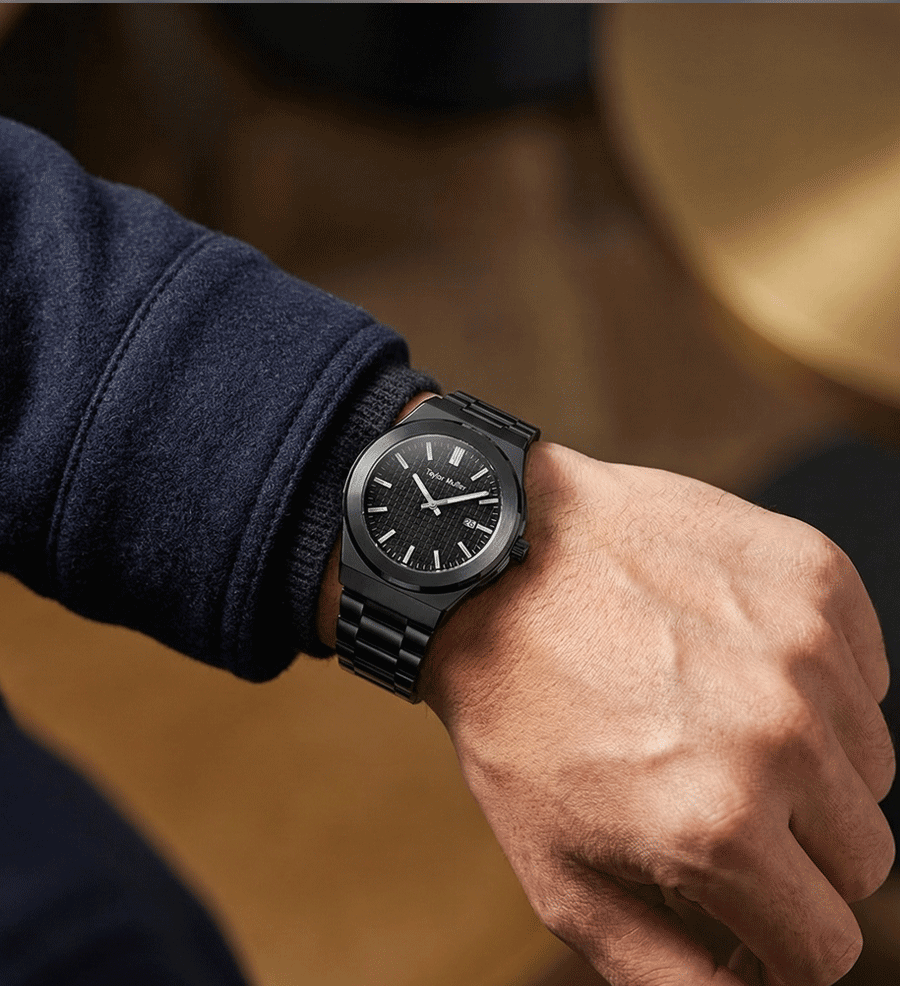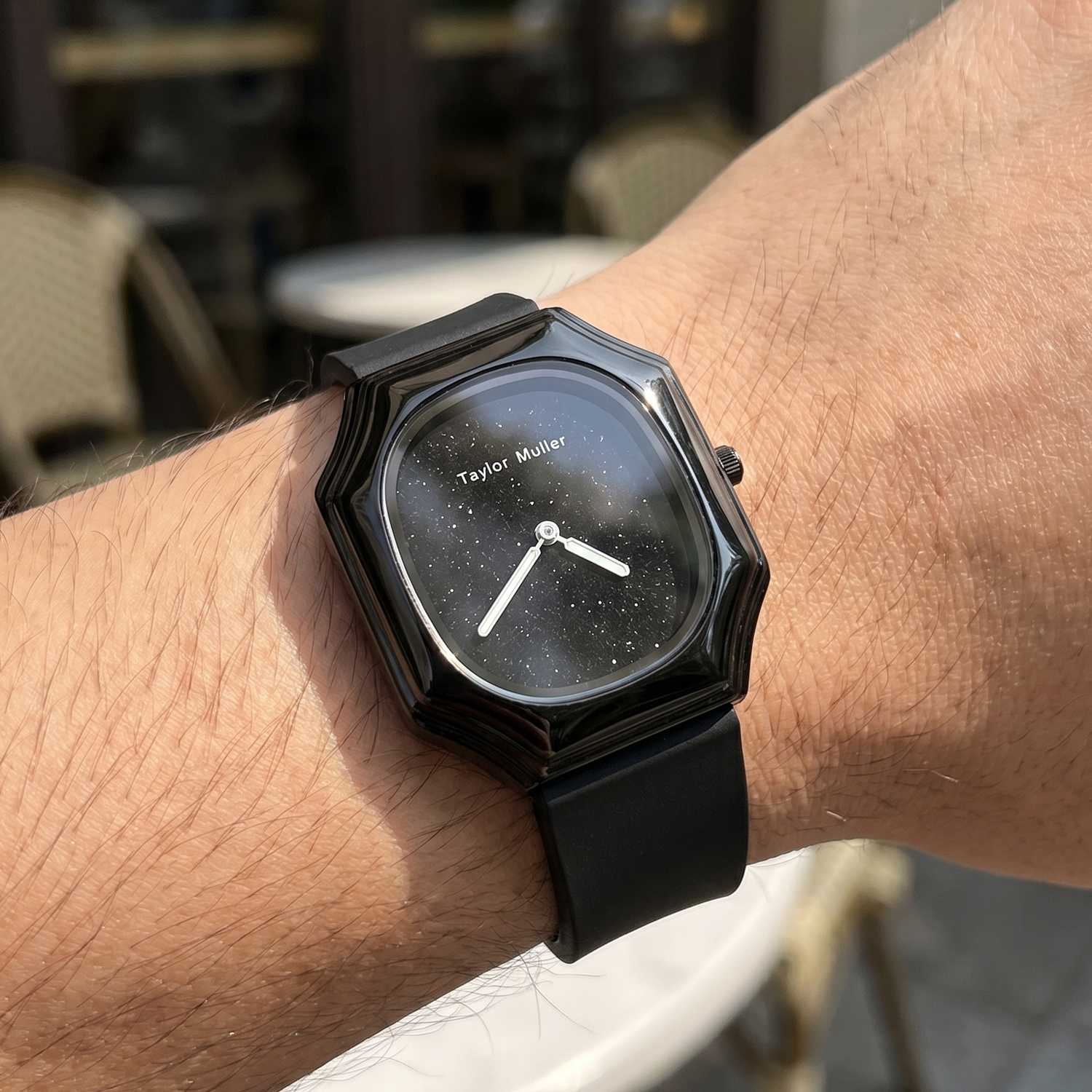
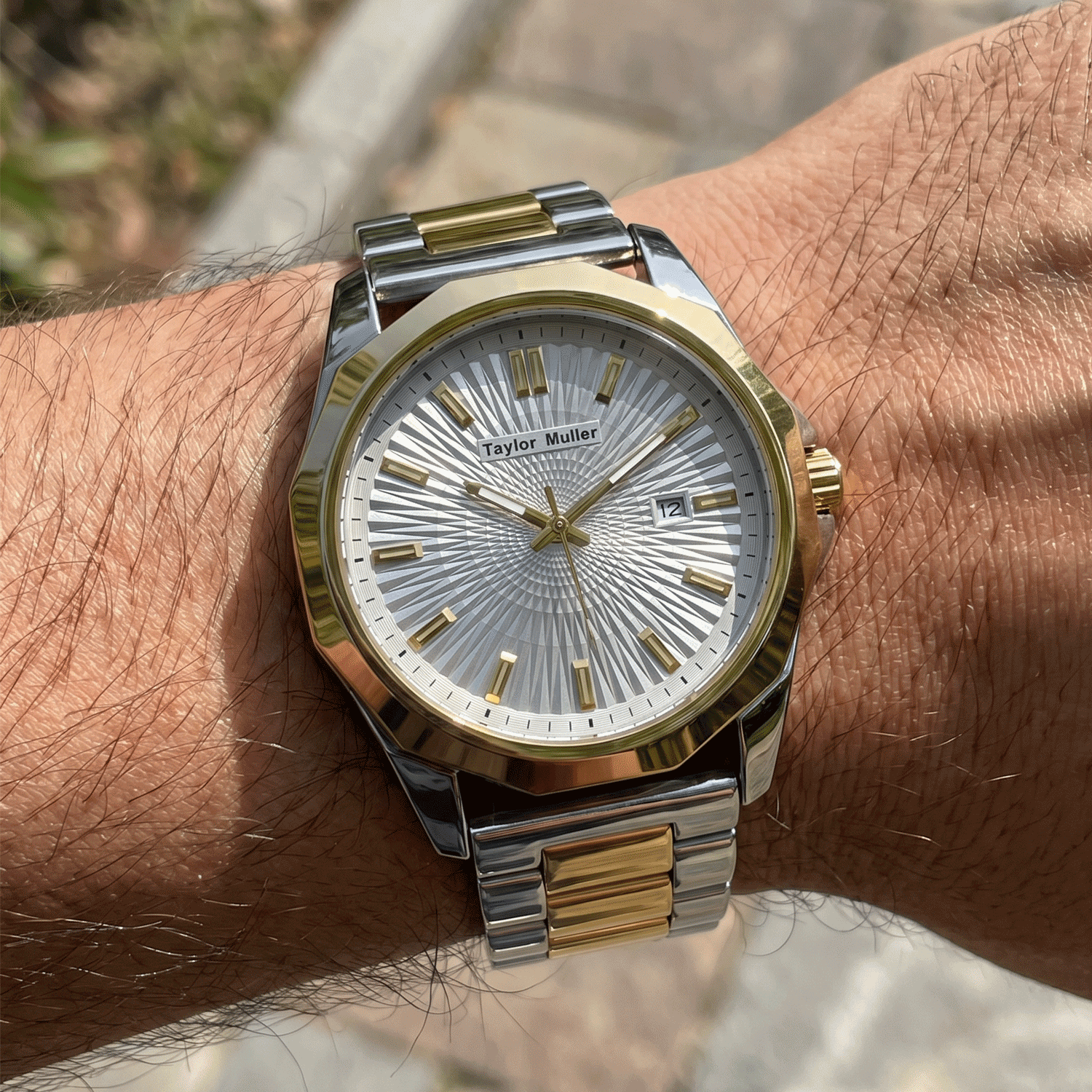
Two cases can come off the same machine and look like two different watches. The shape is identical; what changes is the surface — and the surface is where a case is either sold or returned. It is also where a batch quietly loses its margin, because every finish you add is another pass, another mask and another inspection.
The four finishes you will be quoted
Have a quantity in mind?
Tell us the model, the colours and the quantity — we come back with the exact MOQ, target price and lead time for your build, within 24 hours on working days.
| Finish | What it looks like | How it is done | Where it fits | What to watch |
|---|---|---|---|---|
| Brushed | Fine parallel grain, soft rather than mirror | Abrasive belts and brushes, in one consistent direction | Sport and tool looks; the most forgiving day-to-day finish | The grain direction has to run the same way across case, lugs and bracelet — mixed directions read as a mistake |
| Polished (mirror) | A true reflection | Polishing compound on rotating buffs | Dress watches, gifting, anything that has to photograph well | Fingerprints and micro-scratches show first; needs protective packing |
| Two-tone | Polished bezel and brushed body — or brushed links with polished edges | One finish, then mask that surface before the other one | The premium look at a mid price; a very common request | The boundary has to be a clean line. A mask that slips makes the case look repaired, not made |
| Plated (IP gold, PVD black) | A colour on top of the metal | Vacuum plating over steel or alloy | Extending a range with colour without changing material | Edges wear first; plating cannot be re-polished the way solid steel can |
What drives the cost
- How many surfaces get a different treatment. Each one is another pass, another mask, another inspection point.
- Masking. Two-tone costs more than either finish alone, because the brushed part has to be protected while the rest is polished.
- Rework. A polish that catches an edge, or a mask line that slips, sends the case back. That is where the batch’s margin goes — not in the material.
- Protection. Mirror surfaces need separators and film, and a better box, or they arrive scratched and the whole discussion moves to the return.
How the finish changes the sale
Brushed reads as tool and sport, and it hides daily wear better than anything else. Polished reads as dress and gift, it photographs best, and it shows wear fastest. Two-tone is the one that makes a mid-priced watch look expensive from a metre away — which is why it is asked for so often, and why the quality of the mask line matters more than the quality of either finish alone. Plating lets you add colour without changing the material; the honest thing to do is to say where it wears, not to pretend it does not.
From our workshop
We finish cases in-house, and two-tone is the finish that most often comes back at the inspection bench: the line between polished and brushed has to be clean along the whole case, and a mask that slips by a fraction shows up at arm’s length. The finish is agreed with the drawing, because it decides how sharp an edge is allowed to be — a mirror polish needs an edge that will not catch the buff, while a brushed surface can carry a sharper chamfer. Every finished unit still goes through a water-resistance test before packing, whatever the surface is.
What to put in the specification
Name the finish per surface, not per watch: “case body brushed, bezel polished, centre links polished” is a specification; “two-tone” on its own is not. Add the direction of the brushing if it matters to your design, the colour reference for IP or PVD, and the packing that protects a mirror surface. The routes and the finish options are on our OEM & ODM services page; the 29 references in the catalogue show the combinations we already run, and the factory page covers what we make in-house.
The fastest way to agree a finish is a photograph of the look you want — we can tell you from the photo whether it is a brush, a polish or a plating, and what it will add to the sample. Sample 15–20 days with the fee deducted from the bulk invoice; production 30–45 days after approval; MOQ 300 pcs per model, or 200 pcs when only the dial logo changes on an existing reference.
Further reading: Printed dial or applied indices? · Case materials: 304, 316L, alloy or titanium?