A watch can have a good case, a reliable movement and a clear dial, then feel wrong on the wrist because the strap was treated as a final accessory. The strap carries the weight, touches the skin, controls the first adjustment and is the part most likely to be replaced during ownership. It should be chosen while the case and target market are still open for discussion, not after the design is frozen.
What each material is really good at
Have a quantity in mind?
Tell us the model, the colours and the quantity — we come back with the exact MOQ, target price and lead time for your build, within 24 hours on working days.
| Material | What it gives the product | What to watch |
|---|---|---|
| Leather | Warm appearance, lighter weight and an easy path to a classic, formal or fashion look. | Sweat, water and repeated flexing show first at the buckle, loop and edges. It needs more care than steel or silicone. |
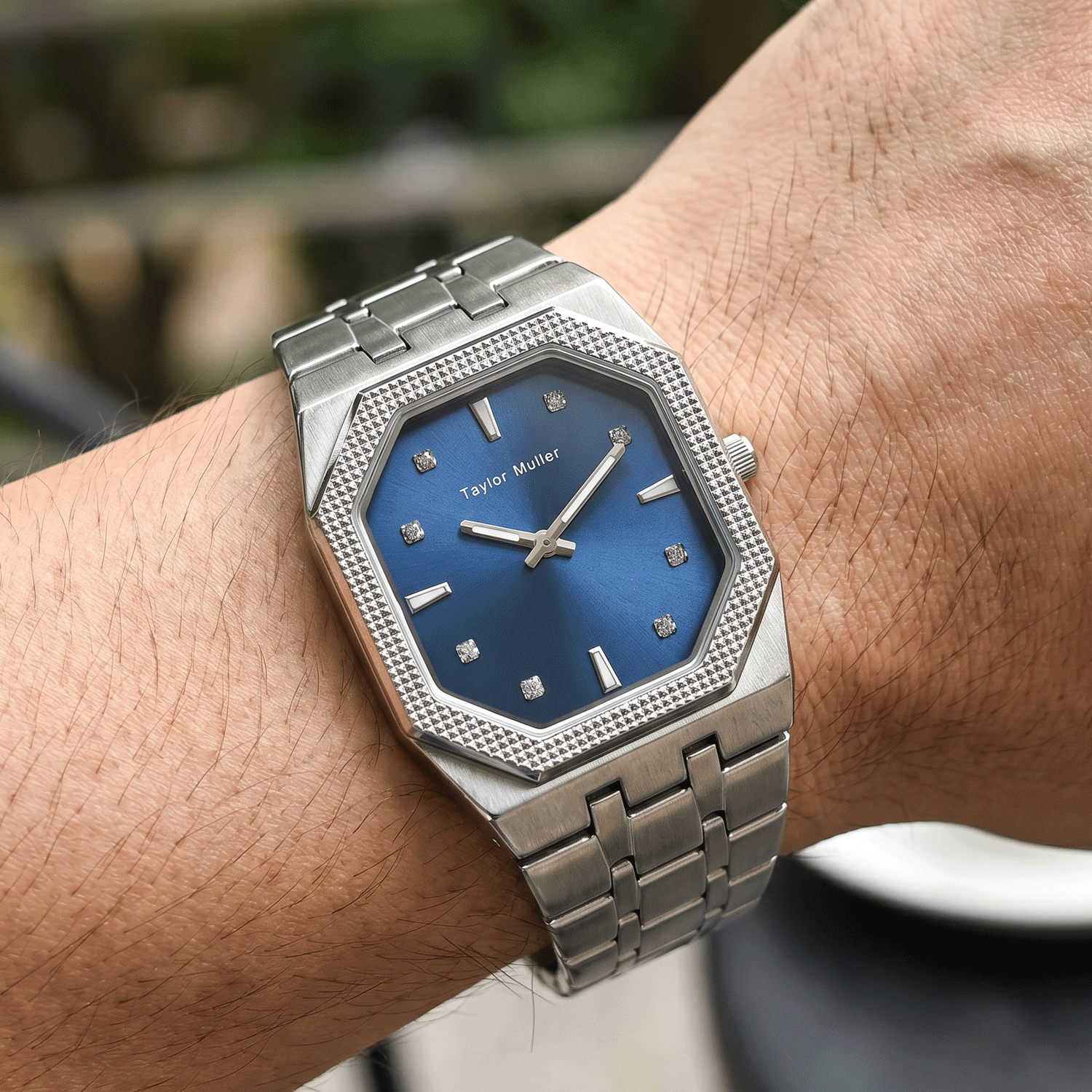
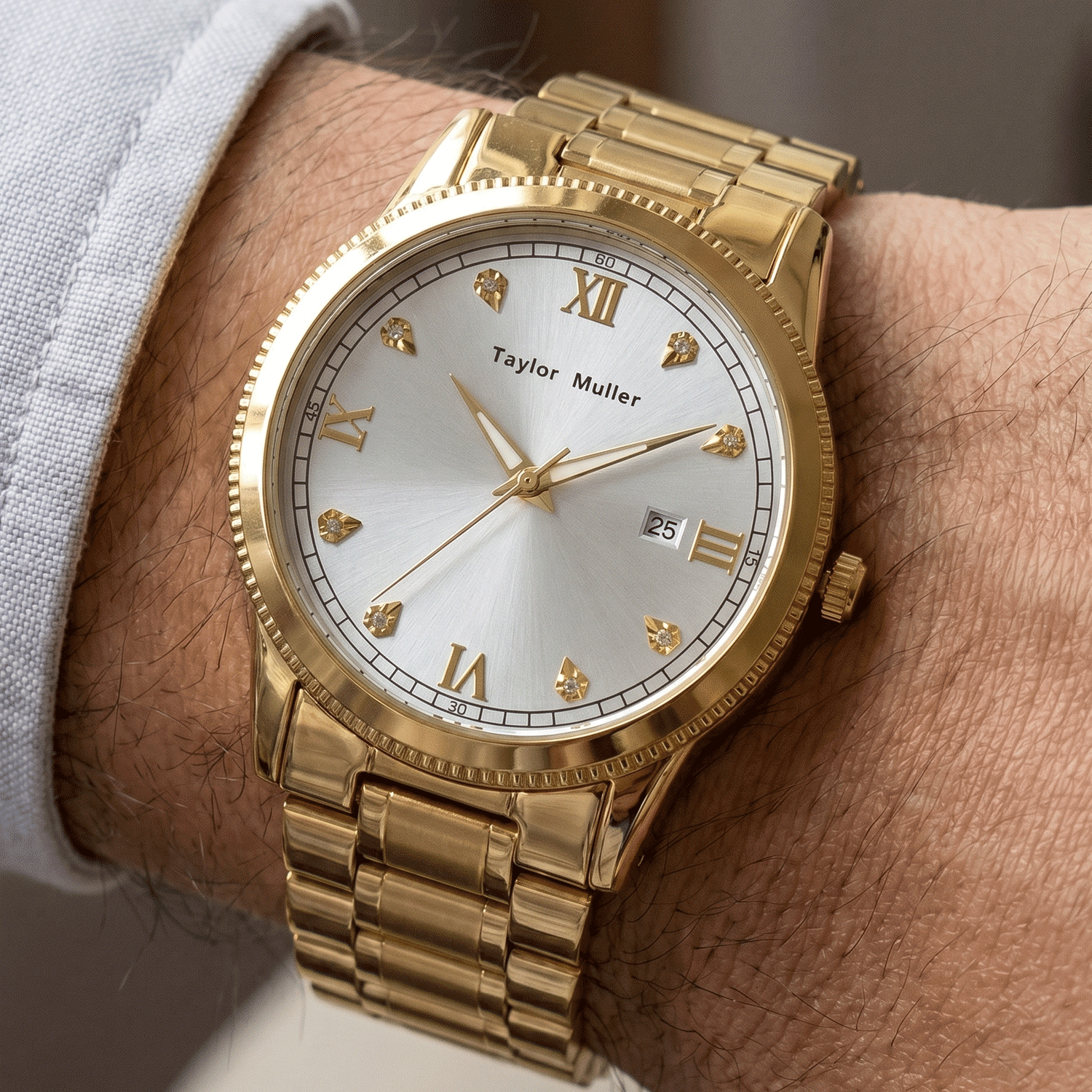
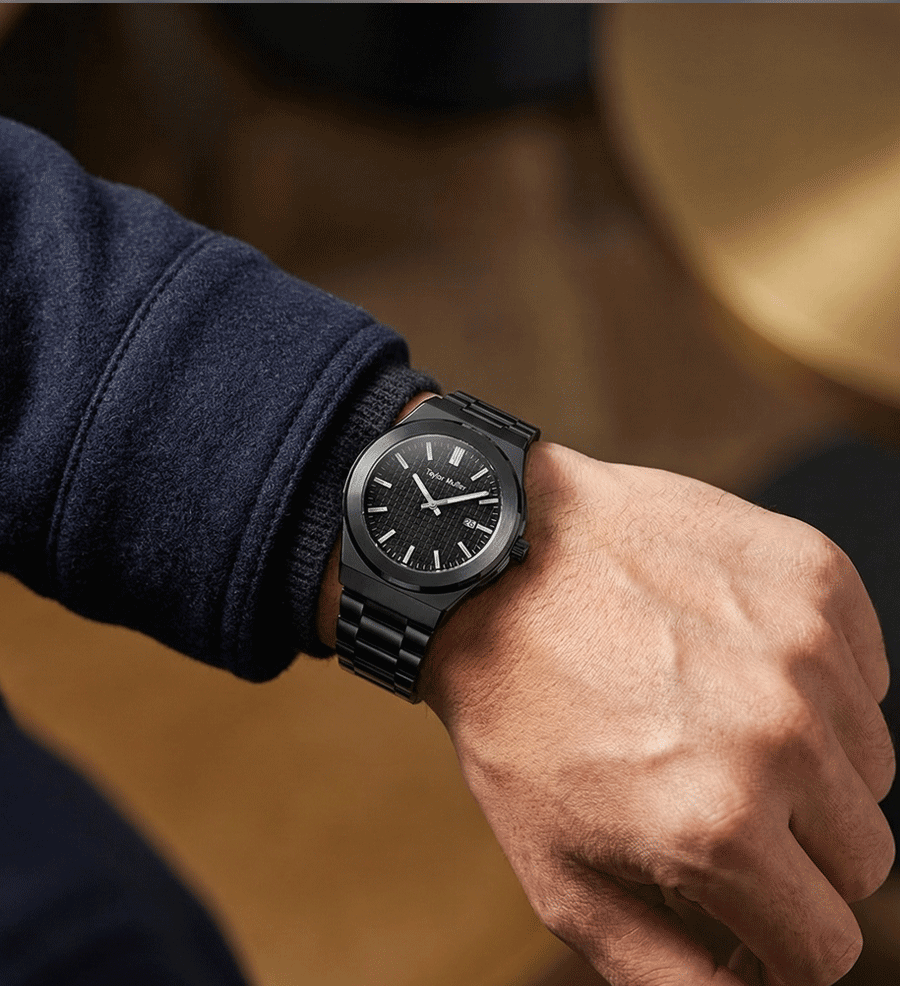
| Steel bracelet | A substantial retail feel, a long service life and a visual match with a metal case. | Weight, removable links, clasp length and end-link fit all matter. The bracelet and clasp add mechanical complexity. |
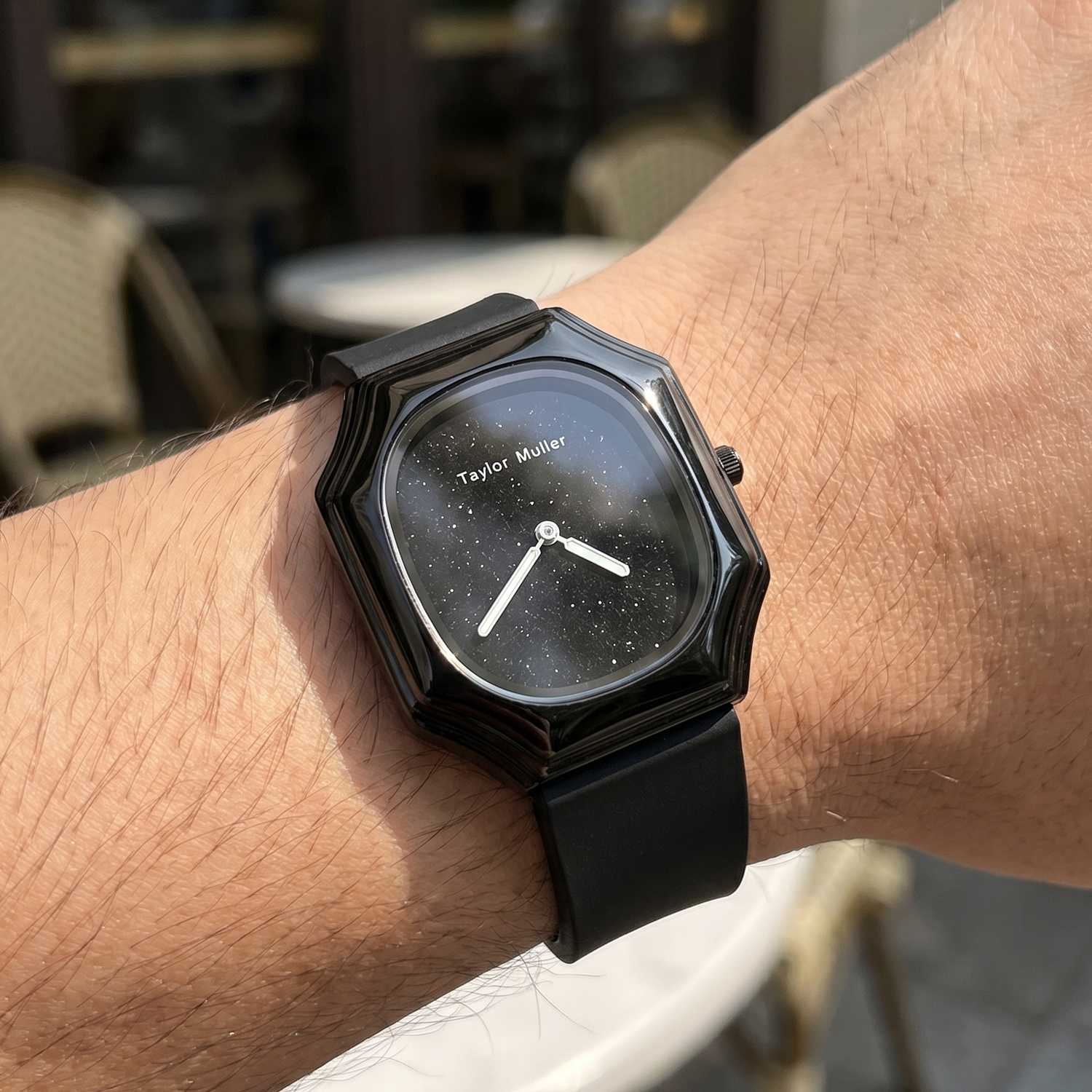
| Silicone or rubber | Flexibility, easy cleaning and a practical answer for hot, humid or active use. | Surface texture can collect lint, and a flexible strap still needs the correct thickness, hardness and hardware. It is not automatically a substitute for proper case sealing. |
The right question is not which material is “best.” It is where the watch will be sold and what the buyer expects to do with it. A leather strap can make a dress watch feel finished. A steel bracelet can make a sports model feel more durable and more valuable on the shelf. Silicone can be the honest choice for a watch that will meet sweat, water and daily cleaning. Mixing one of these with the wrong case finish can confuse the product: a delicate leather strap on a heavy tool watch, or a broad bracelet on a small dress case, creates a mismatch before the customer reads the specification.
What changes the cost and the wearing experience
A strap price by itself says very little. Two leather straps can use the same description and still differ in lining, edge finishing, stitching, thickness and buckle quality. Two steel bracelets can look similar in a photograph while differing in end-link fit, clasp adjustment, finishing and weight. The safest quotation compares the complete assembly: strap or bracelet, buckle or clasp, spring bars if specified, logo treatment and packaging.
- Fit at the case. Lug width is only the beginning; the shape of the strap end, spring-bar position and clearance affect how cleanly it meets the case.
- Weight and balance. A steel bracelet can dominate the feel of an entry watch. Leather or silicone can make the same case feel lighter and more casual.
- Adjustment. A pin buckle offers fewer parts; a folding clasp and removable links offer a more precise fit, but add hardware and assembly checks.
- Cleaning and replacement. In hot or humid markets, buyers often prefer a surface that can be wiped and dried quickly. A quick-release spring bar can also reduce after-sales friction.
- Branding footprint. The dial may carry the main logo, but the buckle, clasp, keeper or strap end is often where a customer touches the brand every day.
From our workshop
We make the case in our own workshop and buy the strap to match it. That is why we do not approve a strap from dimensions alone. It is trial-fitted to the actual case: the end pieces are checked for gaps, the spring bars for alignment, the bracelet for side-to-side play and the clasp for how it closes and sits under the wrist. On a leather or silicone sample we also check the edge, stitching and buckle, because those are the first places a customer notices wear. A late strap change can be more than a new material line: lug clearance, case proportions, weight and packaging may all need to be checked again.
For hot-climate ranges, the practical conversation is usually about cleaning, drying and replacement rather than appearance alone. Steel can be wiped, silicone can be washed, and leather needs more care; we discuss that openly instead of calling one material universally better. The strap and case options are covered on our OEM & ODM services page, while the 29 references in the catalogue show how different strap types change the final character of a watch.
What to put in the specification
Write the lug width, taper, total length, thickness and strap-end shape. State the material grade or construction, lining, colour, edge treatment, stitching and hardware finish. For a bracelet, describe the link style, removable links, clasp type and whether the end links are solid or folded. For leather or silicone, state the buckle and keeper. Add the logo position, any quick-release request, expected exposure to water or heat, packaging and whether the strap must be replaceable by the customer.
A sample runs 15–20 days and its fee is deducted from the bulk invoice; production is 30–45 days after approval; MOQ is 300 pcs per model, or 200 pcs when only the dial logo changes on an existing reference. Choose the strap with the case, market and service plan in view — it is the part the customer will feel before they read another specification.
Further reading: Mineral, sapphire or coated crystal: what buyers actually gain · Case materials: 304 vs 316L vs alloy vs titanium