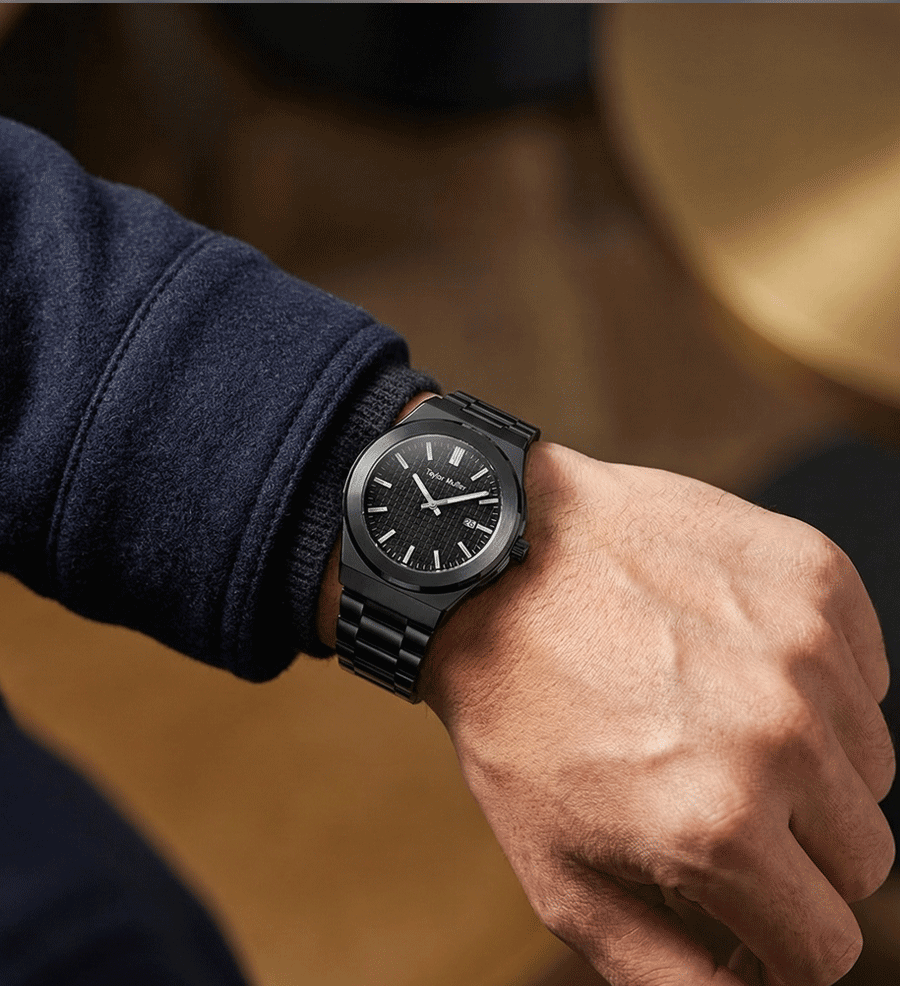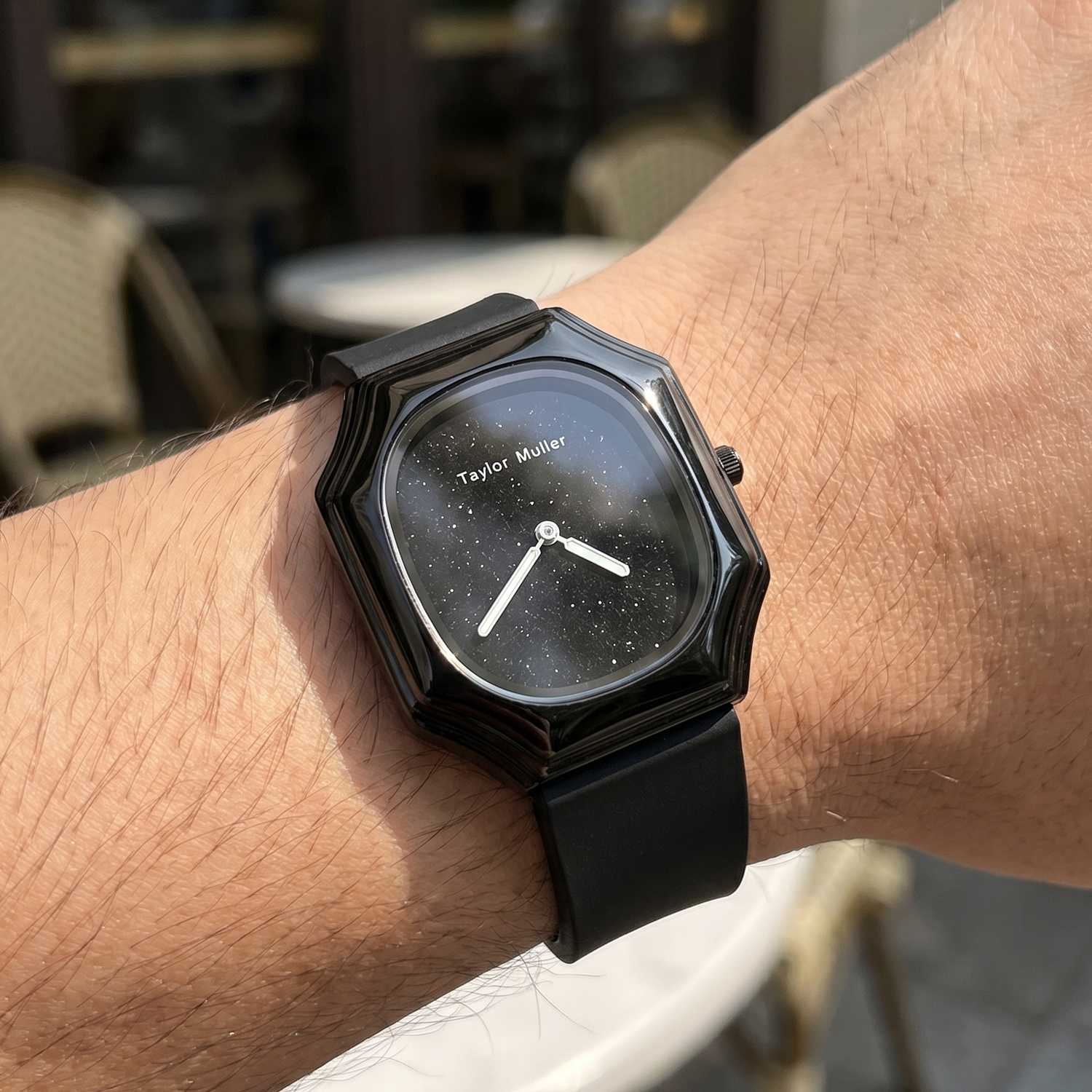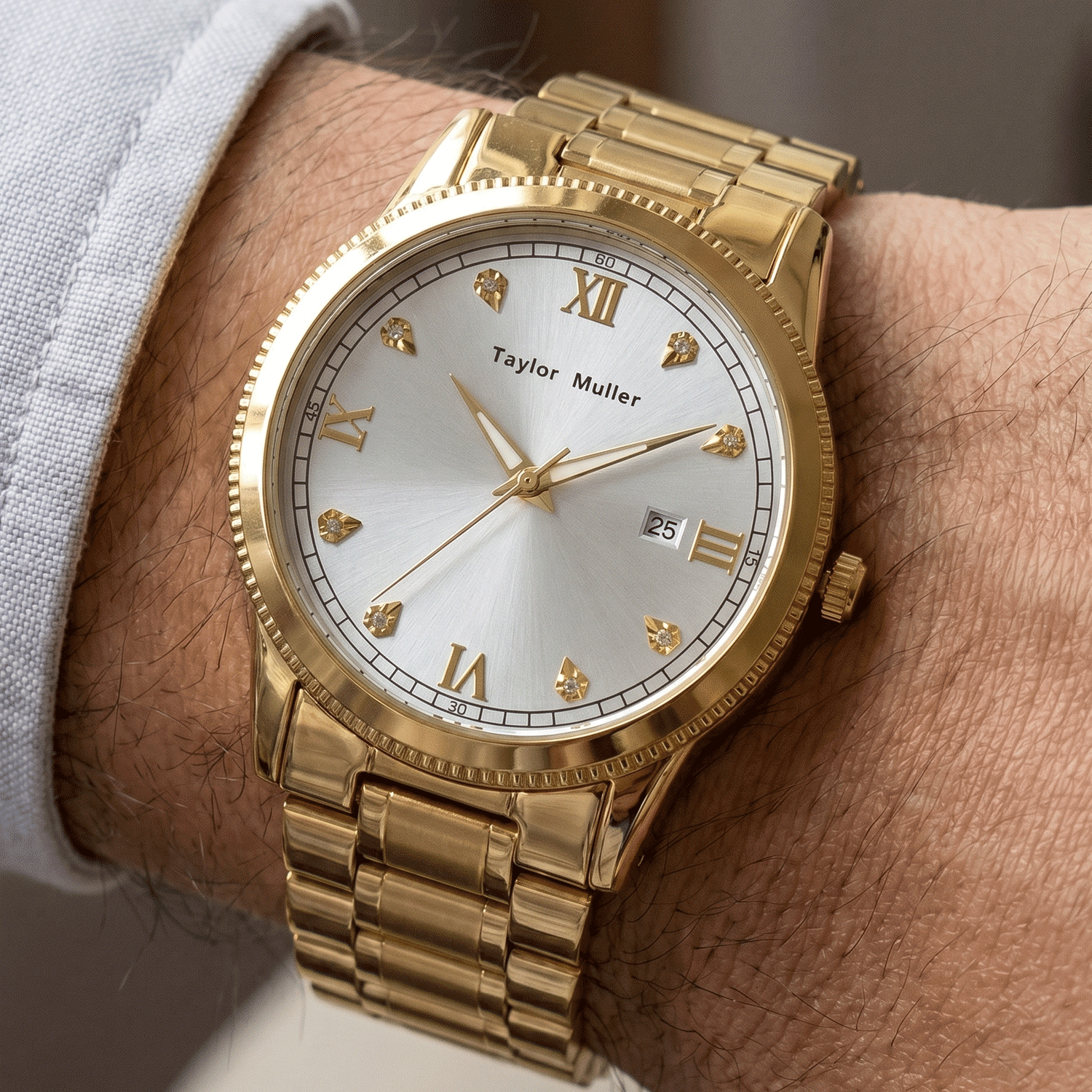
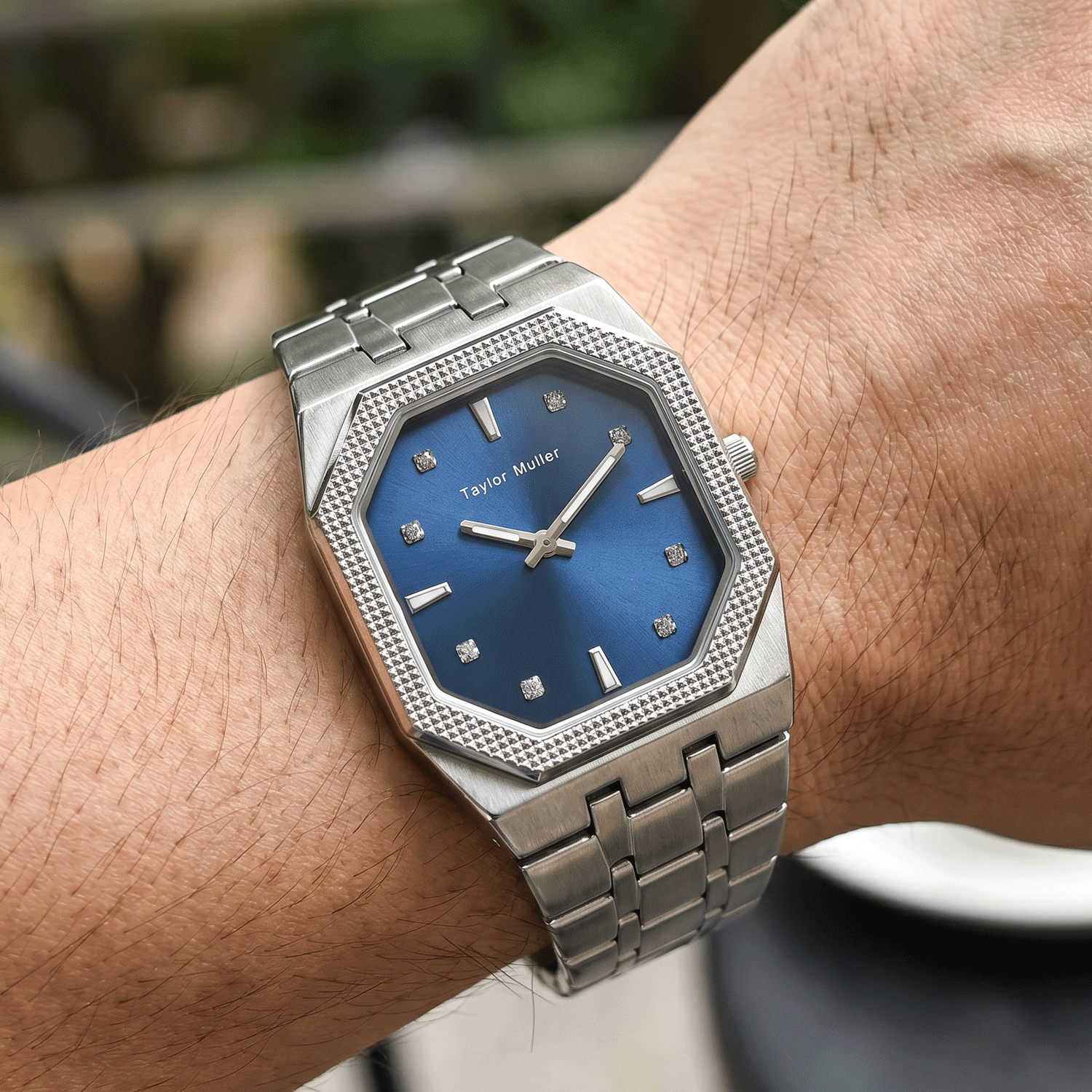
Lug width is one of the smallest numbers on a watch drawing, but it decides how many straps fit the case, how the watch sits on the wrist and what customers can do when the original strap wears out. “20 mm” sounds like a complete specification. In practice, two 20 mm straps can still behave differently.
The reason is that lug width is only the distance between the inner faces of the lugs. The spring-bar holes, lug thickness, case curvature, strap thickness and end shape all affect whether the strap mounts cleanly and remains comfortable.
What lug width actually measures
Have a quantity in mind?
Tell us the model, the colours and the quantity — we come back with the exact MOQ, target price and lead time for your build, within 24 hours on working days.
Lug width is measured between the inner surfaces of the two lugs, where the spring bar sits. It is not the outer case width and not the total distance from one side of the watch to the other. A caliper held in the wrong place can produce a confident number that still leads to a bad strap order.
For a production brief, separate these dimensions:
- Lug width — the opening that accepts the strap or bracelet.
- Lug-to-lug — the overall vertical span of the case, which affects wrist fit.
- Spring-bar position — how far the holes sit from the case and how deep they are.
- End shape — straight, curved, notched or designed as a fitted metal end link.
- Strap thickness — especially where it passes between the lugs.
Why 20 mm is such a practical standard
20 mm is not automatically better than every other width, but it is a useful middle ground. It gives enough material for leather, silicone and steel without making a moderate case look bulky, and replacement straps are easier to source than unusual widths.
| Lug width | Typical use | What to watch |
|---|---|---|
| 18 mm | Smaller and dress-oriented cases where a lighter strap suits the proportions. | Check that a thick strap does not overpower the lugs and that the buckle remains proportionate. |
| 20 mm | A versatile middle size for many everyday cases and several strap types. | Confirm spring-bar clearance and curved-end geometry; the width alone does not guarantee fit. |
| 22 mm | Larger or sport-focused cases that need a stronger strap presence. | Check lug thickness, weight and whether a tapered strap keeps the buckle comfortable. |
Two straps with the same width can still fit differently
A thick leather strap needs more clearance than a thin fabric strap. A curved end can close the gap against a round case; a straight end may be easier to replace but show a visible gap. A fitted steel bracelet is a separate construction: its end links follow the case profile and cannot be judged from lug width alone.
Spring bars also matter. Quick-release bars make owner replacement easier, but the retaining feature must suit the lug and the expected load. A spring bar that is too thin or too short is not a shortcut to compatibility. For a sample, mount the actual intended strap rather than assuming that the drawing is enough.
What to write in the specification
- Lug width — the exact opening in millimetres.
- Strap type — leather, silicone, fabric, mesh or steel bracelet.
- End shape — straight, curved, cut to the case or fitted end link.
- Spring bar — standard or quick-release, and any removal requirement.
- After-sales plan — whether customers will buy a replacement from you or use third-party straps.
We make our own cases from 20–60 mm, while straps and movements are selected to match the model and market. That means lug geometry can be engineered with the case, but the strap must still be checked as a complete assembly. The factory page shows the work done in-house, and the watch catalogue gives reference constructions to compare.
A 20 mm lug opening supported by many strap options can simplify after-sales, but only when the case and end shapes are designed around it. If you plan to sell spare straps, decide that before tooling; it can affect the lug finish, spring-bar access and packaging.
For a new project, send the case reference, exact lug width, strap material and expected replacement route. Full customization starts at 300 pcs per model; changing only the dial logo on an existing reference starts at 200 pcs. Samples usually take 15–20 days, followed by 30–45 days for production after approval. The FAQ covers related warranty and material questions.