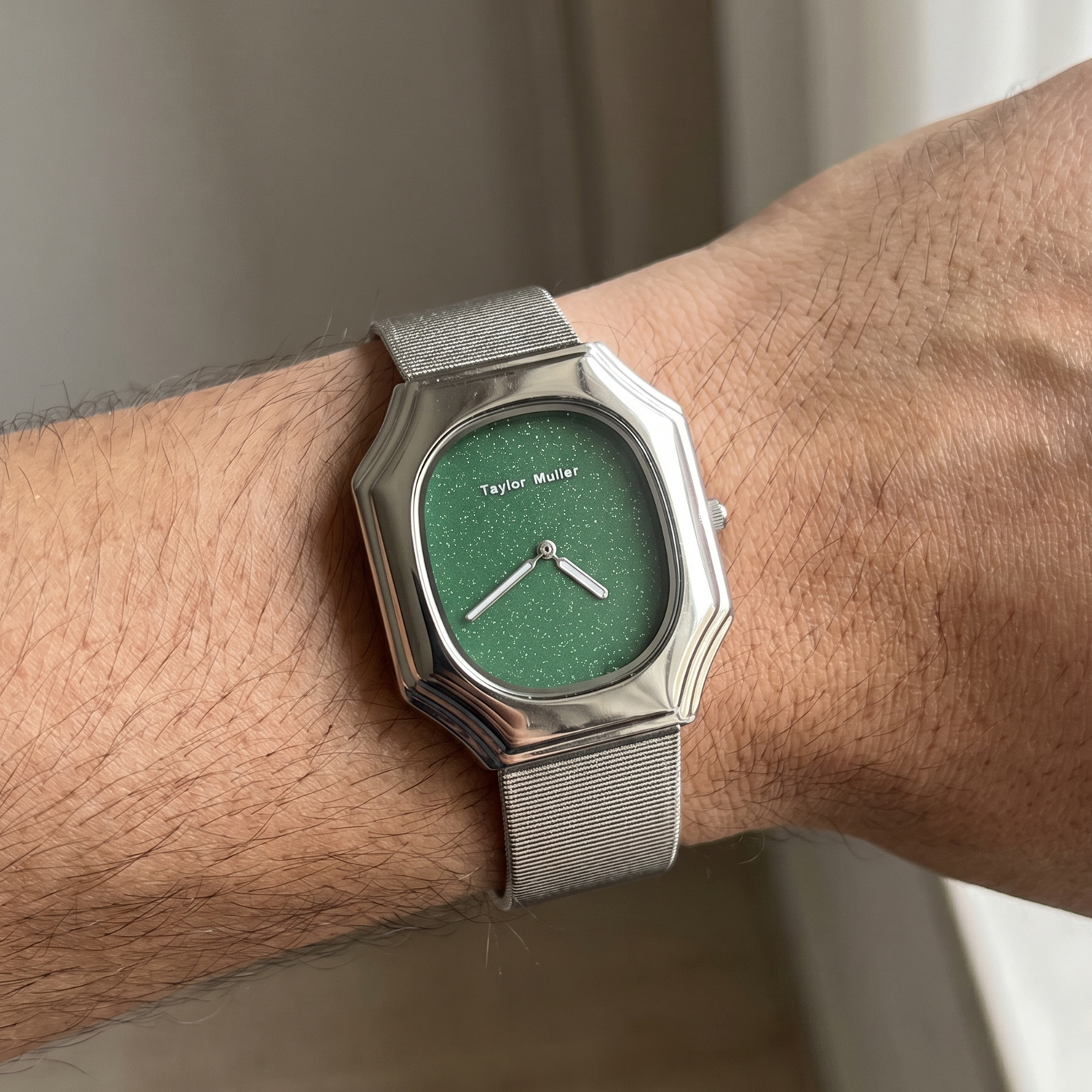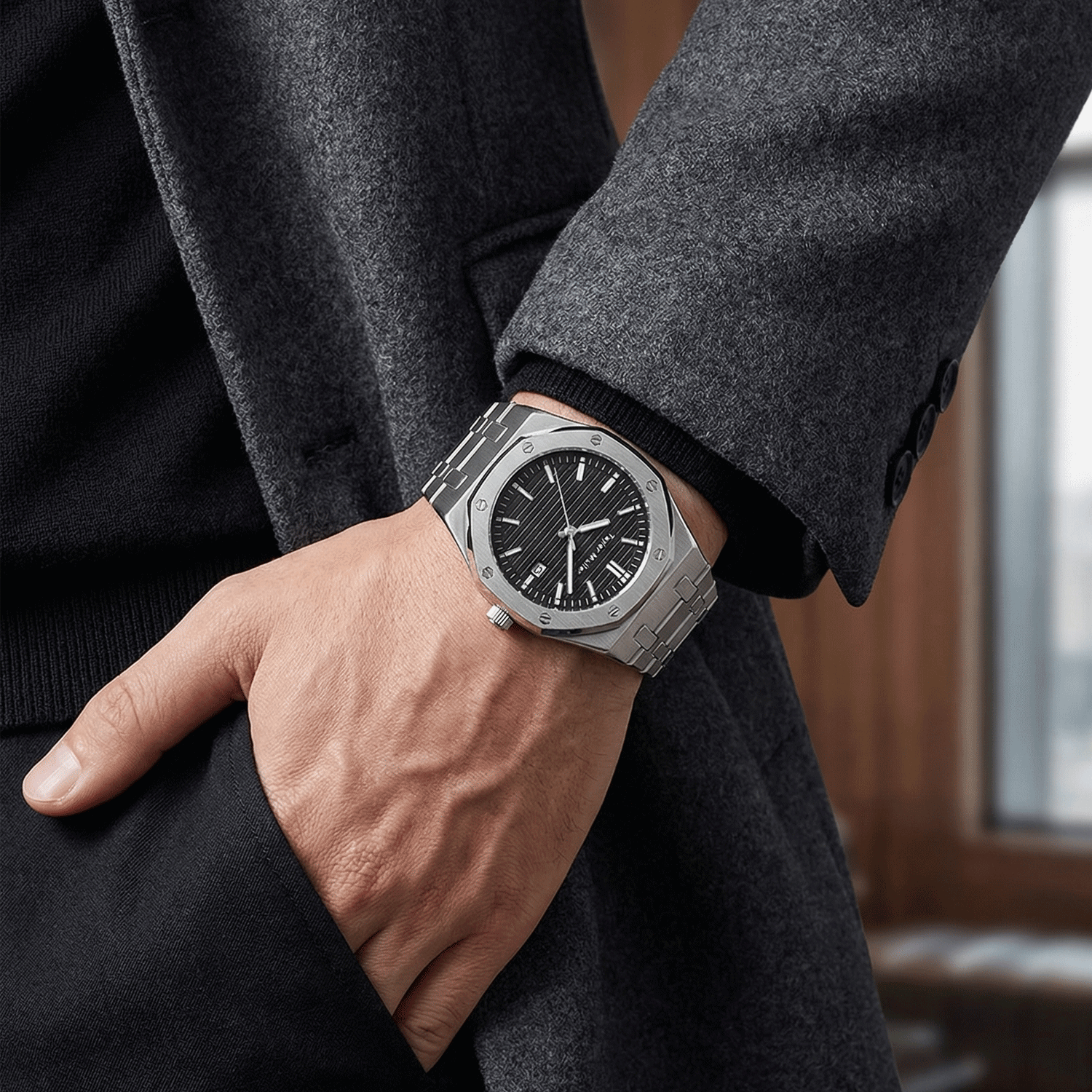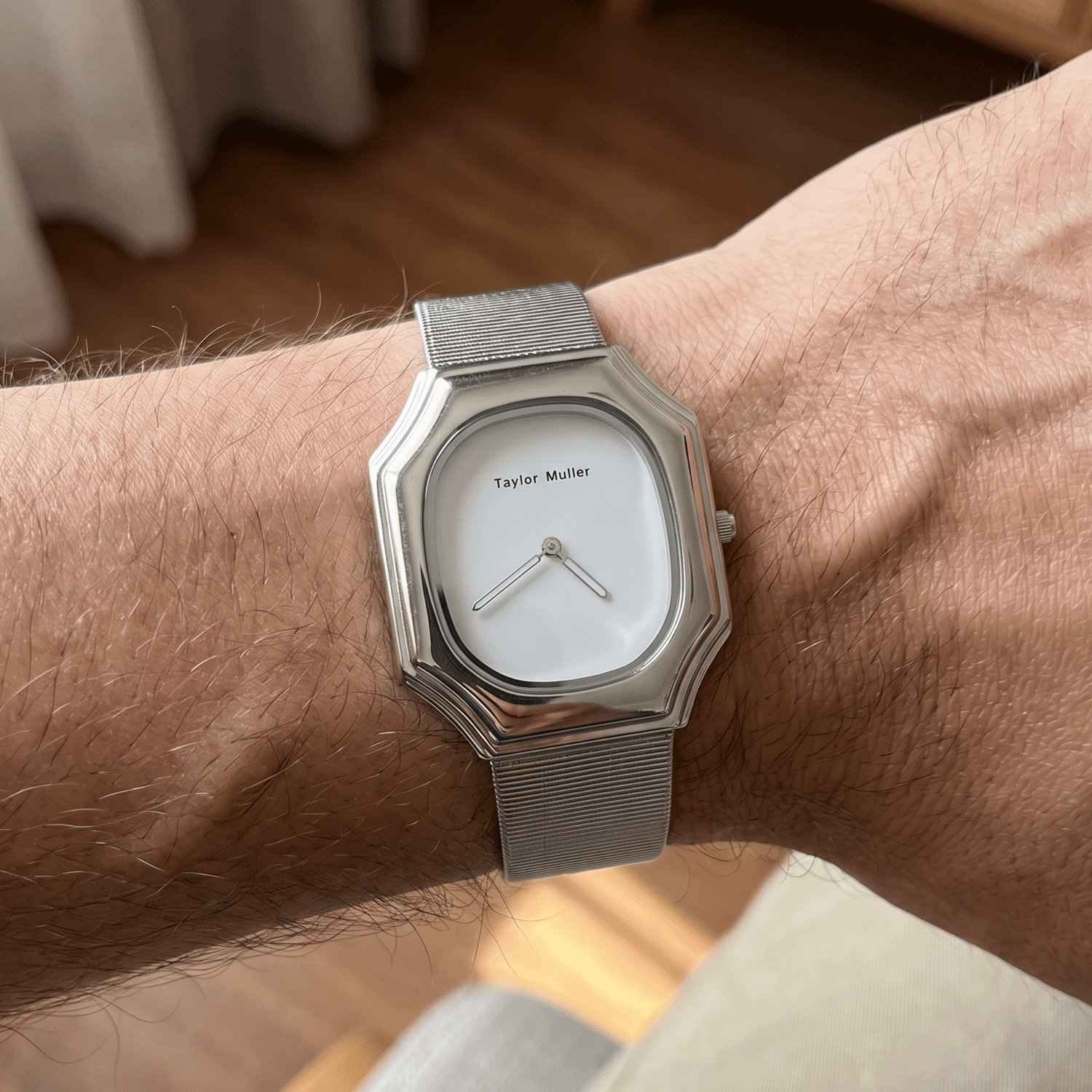
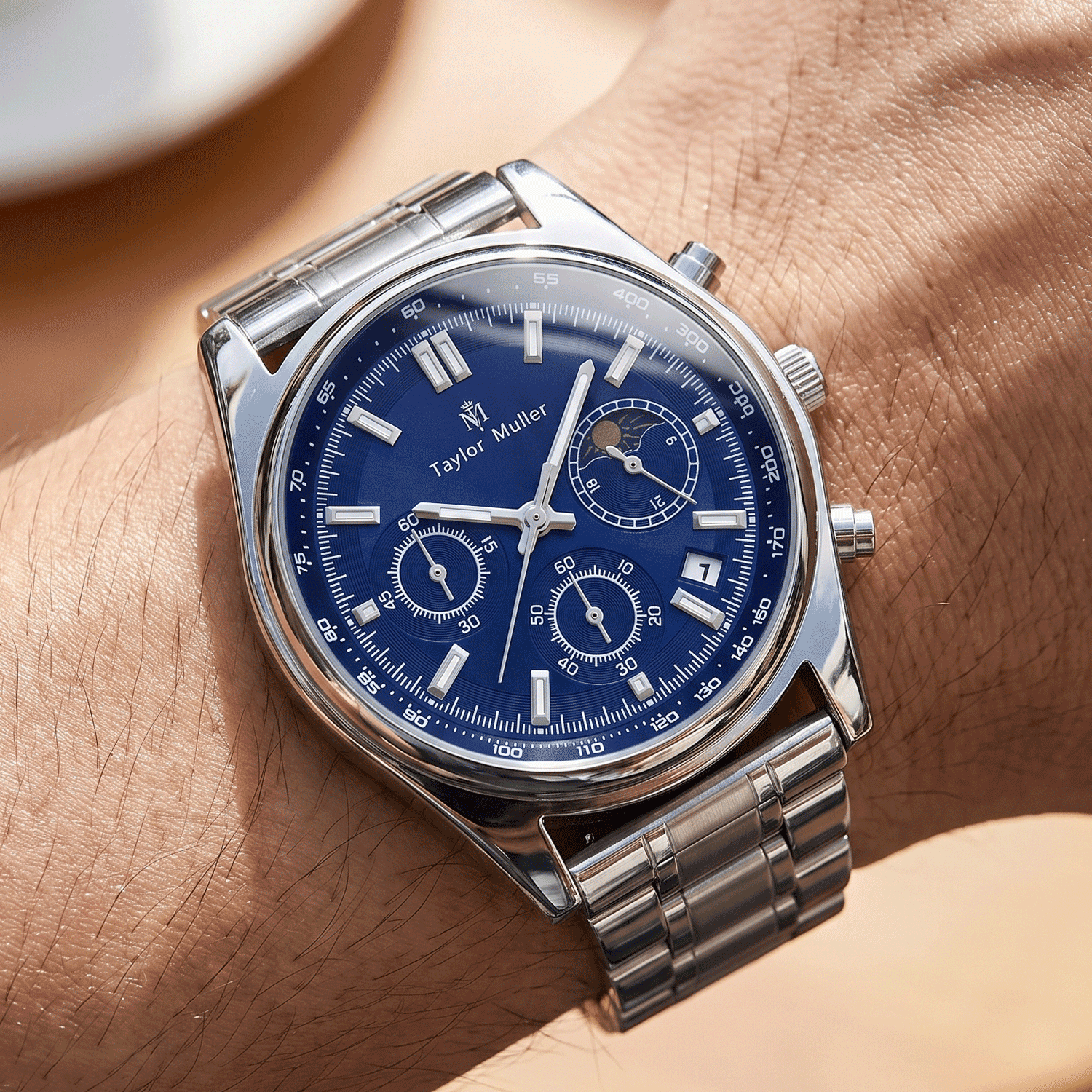
Case diameter is the first number buyers compare, but it is only one part of fit. A 40 mm watch with long straight lugs can wear larger than a curved 42 mm case. A thick 36 mm sports watch can sit differently from a slim 36 mm dress watch. The wrist sees the whole shape, not the number on the drawing.
That is why asking only for “36, 40 or 44 mm” can lead to the wrong sample. The useful decision is the proportion between case diameter, lug-to-lug distance, thickness, dial opening and strap width.
Diameter is only one dimension
Have a quantity in mind?
Tell us the model, the colours and the quantity — we come back with the exact MOQ, target price and lead time for your build, within 24 hours on working days.
These measurements matter together:
- Case diameter — the nominal width across the case, usually without the crown.
- Lug-to-lug — the vertical distance from the tip of one lug to the other. This often decides whether the watch overhangs the wrist.
- Thickness — affects how high the watch sits above the wrist and whether it catches a shirt cuff.
- Dial opening — a wide bezel makes the visible dial smaller; a narrow bezel makes the same diameter look larger.
- Lug shape and strap width — curved lugs, flexible bracelets and tapered straps change the apparent size on the wrist.
What 36, 40 and 44 mm usually change
The numbers are starting points, not a size chart that applies to every wrist. Use them to compare the character you want:
| Case size | Typical visual effect | What to check on the sample |
|---|---|---|
| 36 mm | Compact and classic; often shows more bracelet or strap around the wrist. | Whether the dial remains legible after reducing indices, text and hand dimensions. |
| 40 mm | A broad middle ground; it can read as dress, everyday or sport depending on the rest of the design. | Lug-to-lug distance, bezel width and whether the watch sits flat on the wrist. |
| 44 mm | A stronger wrist presence with more room for a busy dial or bold bezel. | Thickness, weight, lug curve, crown clearance and how it fits under a sleeve. |
None of these sizes belongs automatically to one gender or market. A 36 mm case can be a men’s dress watch, a 44 mm case can be too large for a tall wearer with a narrow wrist, and a 40 mm case can become visually heavy if its bezel and bracelet are wide.
Judge the sample as worn, not on the table
A watch photographed flat can look balanced while its lugs extend beyond the wrist in real life. Wear the sample with the intended strap, move the arm and check it under a sleeve. Look at the lug tips, the gap between the wrist and the case back, and whether the crown presses into the hand.
Also look at the dial from a normal viewing distance. The edge of a 44 mm dial may be harder to read at a glance if the hands and indices were scaled too small. A 36 mm dial can feel busy if the date window and text were not repositioned. For reference points, browse the watch catalogue and compare complete watches rather than isolated drawings.
What the factory needs from the buyer
Send the case diameter you like, the wrist size or a watch that already fits well, the type of strap, and whether the intended result is subtle, balanced or deliberately oversized. If you have a photo of the watch on a wrist, include it; a flat product picture cannot show fit.
We make our own cases from 20–60 mm in stainless steel, alloy or titanium, so 36, 40 and 44 mm are not tooling limits. The work is in getting the proportions right. Changing diameter without changing the dial opening, lug angle, strap width and movement holder can make the same design look wrong at a different size. The factory page explains which case operations happen in-house, and our OEM/ODM services cover the route from drawing to sample.
A simple fit brief
- Preferred diameter — 36, 40 or 44 mm, with a reference watch if possible.
- Wrist information — wrist circumference, a photo, or the model that currently fits.
- Wear intention — compact, balanced, oversized, dress, sport or unisex.
- Strap and bracelet — width, taper and desired flexibility.
- Dial priorities — clarity, logo space, date position or a clean face.
A short brief with these five points gives us more than a paragraph of adjectives. It also tells the sample room which trade-offs matter. Full customization starts at 300 pcs per model; a dial-logo-only change on an existing reference starts at 200 pcs. Samples usually take 15–20 days, followed by 30–45 days for production after approval.
The right size is the one that keeps the design balanced on the wrist you are selling to. Start with the complete construction, not a single diameter, and the sample becomes a useful decision tool instead of a guessing game.