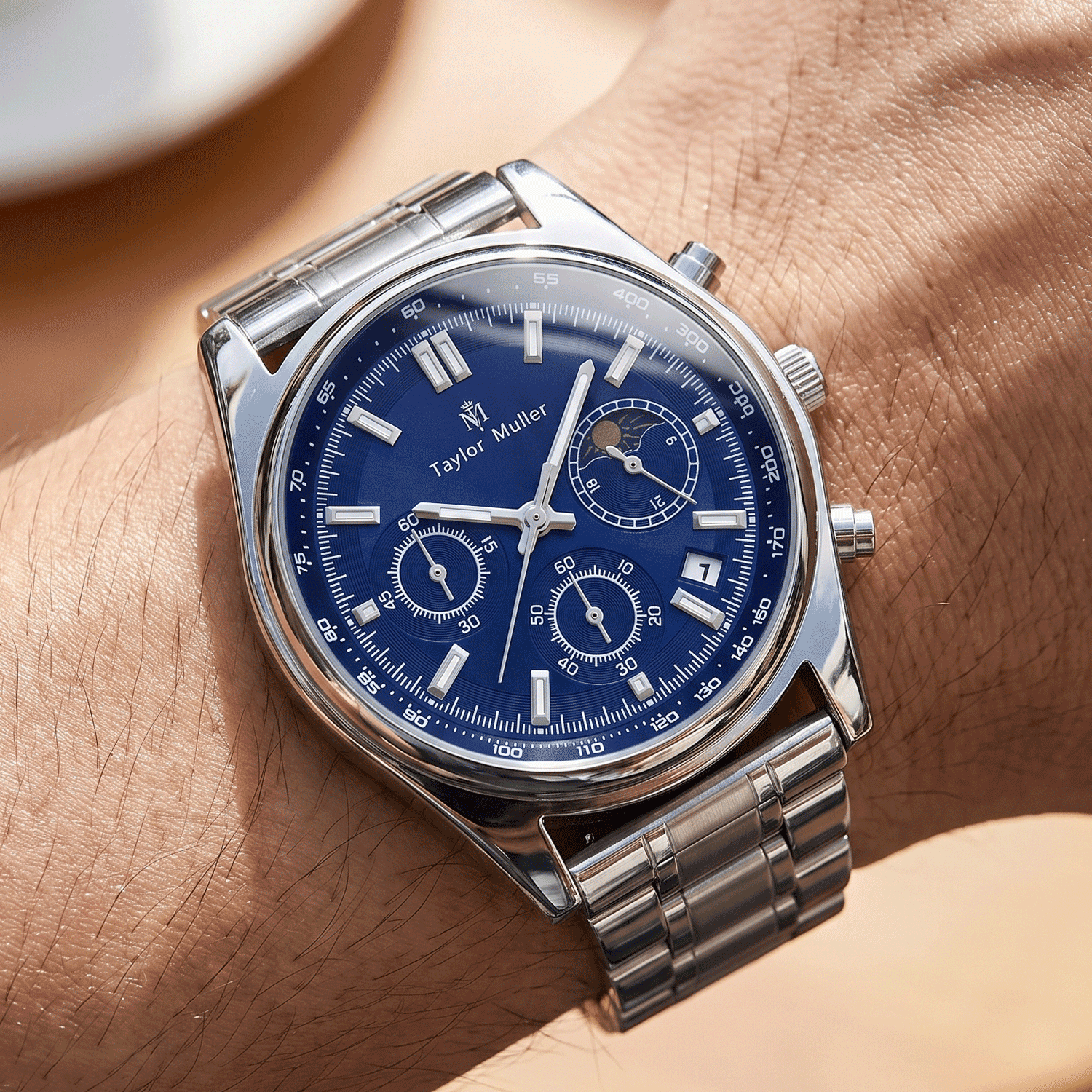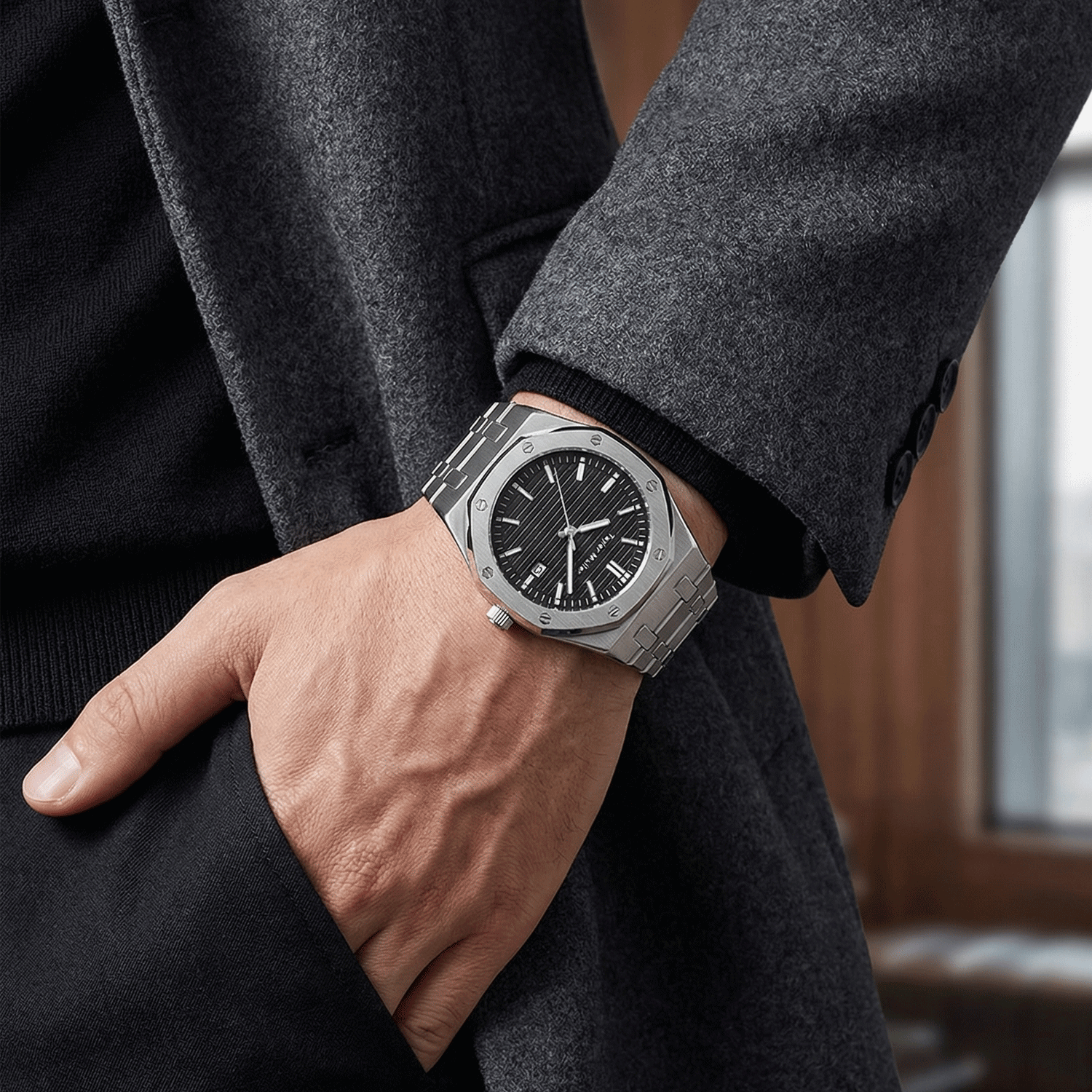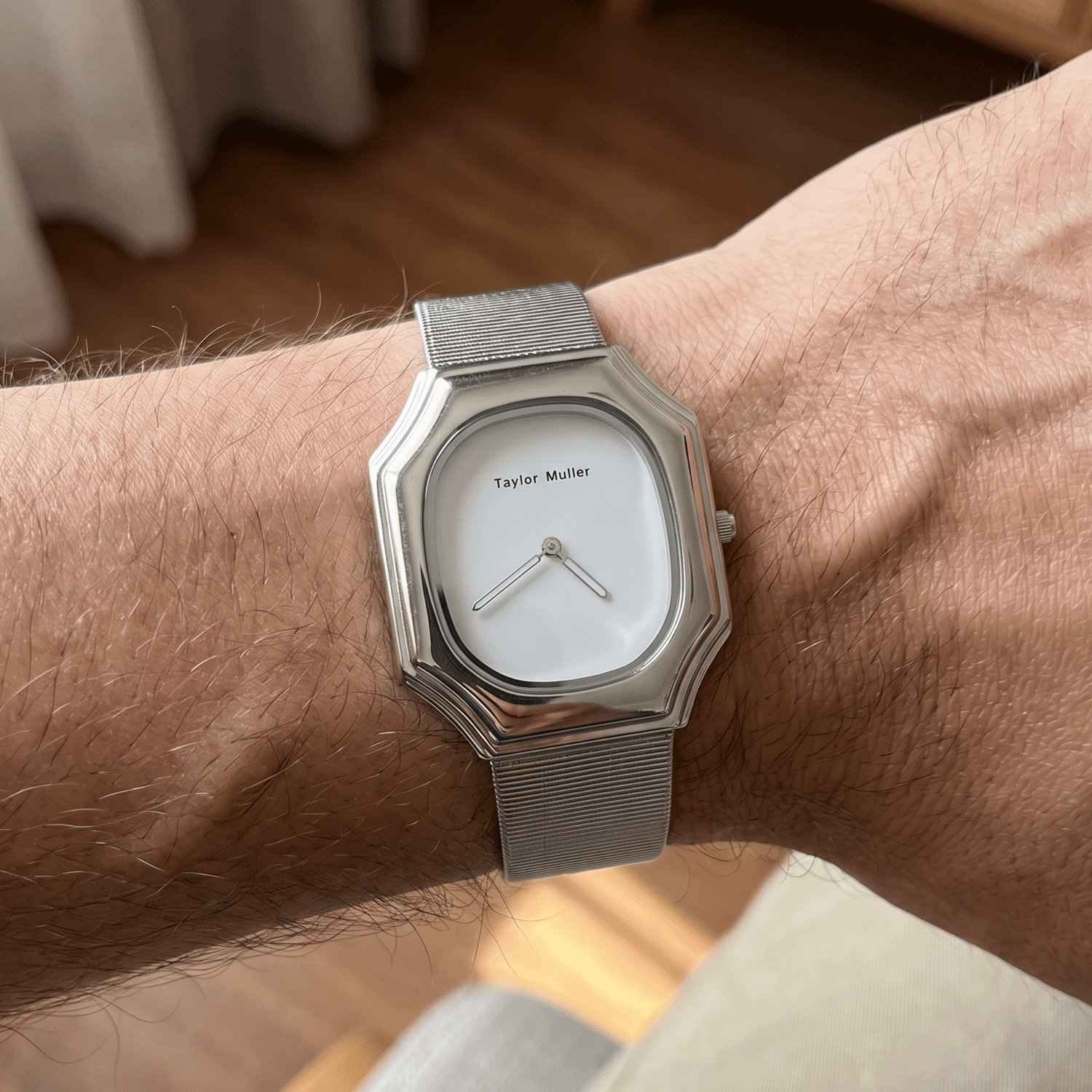
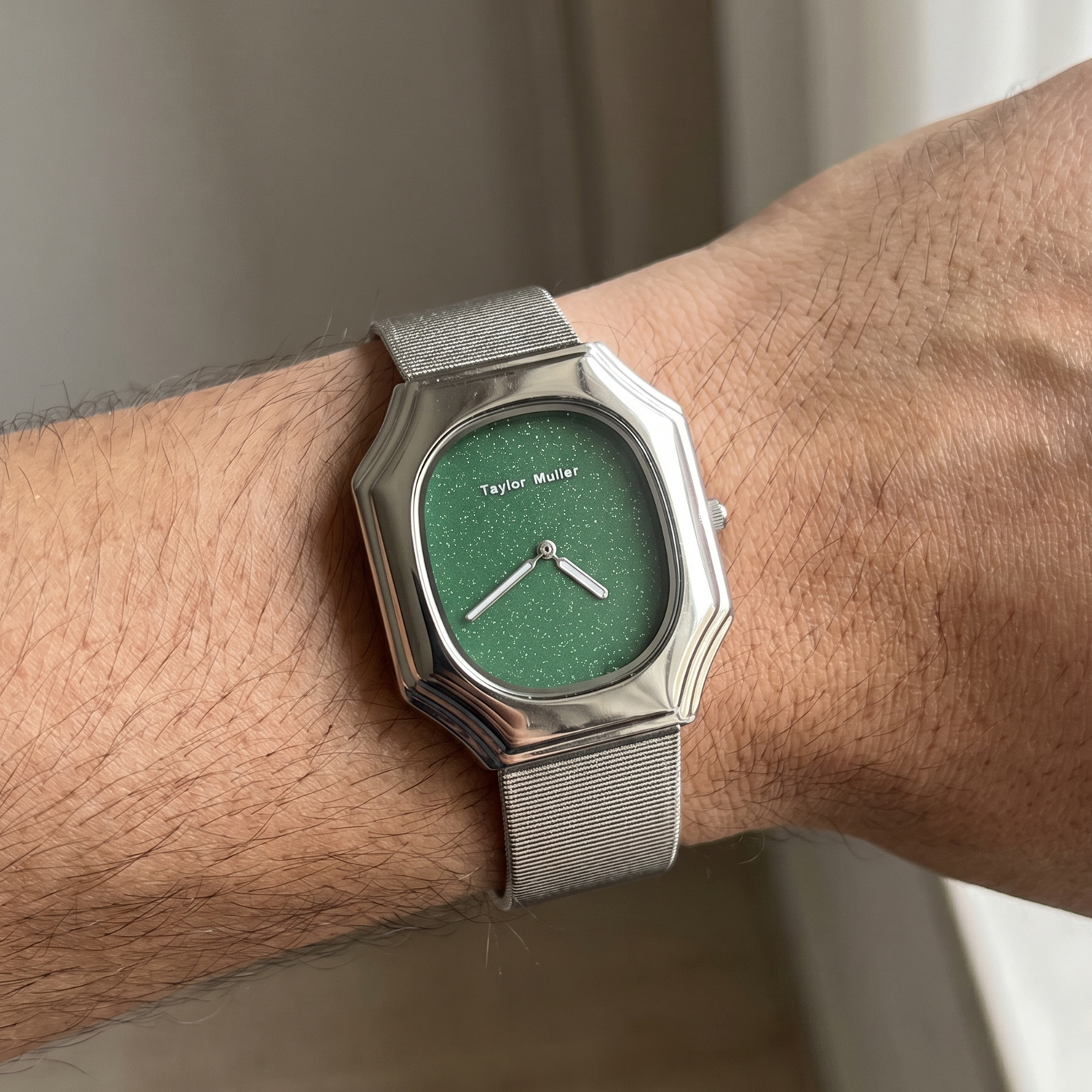
A watch quotation gets expensive when the factory has to guess. A missing finish, an unspecified movement grade, or an unsized logo can turn one email into five rounds. The most useful spec sheet removes the small decisions a factory would otherwise make for you.
A good specification also protects the buyer: one version to quote, one to sample and one to check before production. If those versions differ, nobody can tell whether the sample is wrong or the brief changed.
Start with the commercial frame
Have a quantity in mind?
Tell us the model, the colours and the quantity — we come back with the exact MOQ, target price and lead time for your build, within 24 hours on working days.
Before discussing decoration, tell us what the project must achieve commercially. These five lines are enough to start:
| Decision | What to write |
|---|---|
| Reference and quantity | Use one of our model numbers or attach your own drawing. State quantity per model and per colour. Full customization starts at 300 pcs per model; changing only the dial logo on an existing reference starts at 200 pcs. |
| Target price | Give a realistic landed or FOB target and say whether it includes packaging. A range is more useful than a number with no market context. |
| Market | Name the selling country, channel and buyer type. A watch sold through a boutique, a marketplace and a corporate-gift programme needs different packaging and compliance. |
| Timing | Say when you need the sample and when production must ship. Samples usually take 15–20 days; production takes 30–45 days after sample approval. |
| Trade terms | FOB Guangzhou or EXW Guangzhou are our standard starting points. Payment is 40% deposit and 60% before shipment. |
It lets us quote the same construction you actually intend to sell, and exposes a target price that cannot support the requested case, movement, dial work and packaging before sampling begins.
Describe appearance in production language
Words that work in a showroom often fail in a sample room. “Silver” does not define a case, and “gold” does not define a finish. Be specific about the following:
- Case — material, diameter, thickness, lug width, surface finish and whether the sides and bezel are polished, brushed or two-tone.
- Dial — base colour, finish, printed or applied indices, text, logo size and position. Use a physical colour reference where colour is important.
- Hands and lume — hand shape, colour and lume area. A small change in hand width can alter the whole character of the dial.
- Movement — quartz or automatic, preferred grade and the functions required. Brand and accuracy expectations should be stated separately.
- Strap — material, colour, width at the lugs, buckle or clasp, and the finish of the hardware.
If you already have a reference, mark up a photograph instead of writing a paragraph. Circle the case, add arrows to the finish, and label the parts that must stay exactly the same. Our watch references can be used as a visual starting point, but the written specification still has to say what changes.
Make the technical file usable
Put one dated specification in charge. Name the file clearly, state its version, and remove older files from the conversation. The working pack should contain the specification, your logo in vector format, packaging artwork, barcode instructions, and any required compliance documents.
For branding, give the exact logo file and placement dimensions. For packaging, distinguish the product label from the shipping label and explain whether marketplace-ready labelling is required. If certification is part of the requirement, list the exact market and certificate rather than writing “all certificates”. Our FAQ explains the limits of what a factory can claim.
What the sample room needs from you
We make our own cases, from 20–60 mm, in stainless steel, alloy or titanium. Movements and straps are selected to match the model, target price and market, then checked in our workshop. That means the sample room can solve construction questions, but it cannot invent a clear finish decision for you.
We also review dial artwork at its real size. A thin line that looks clear on a phone can disappear on the actual dial, and a marker that looks balanced on screen may crowd the hands once it is applied. The earlier this is seen, the cheaper the correction.
A simple approval loop
- One complete brief — the spec, reference image, logo and target quantity arrive together.
- One written interpretation — we reply with the construction we understand, plus the points that need a decision.
- One sample drawing — dimensions, finishes, placement and artwork are approved on paper first.
- One sample review — collect comments by part, not in separate messages across several days.
- One production version — lock the approved specification before the bulk order begins.
A clean spec sheet does not remove every technical question. It makes the questions precise. That is what shortens the quotation, protects the sample date, and keeps the second production run identical to the first.
If your requirement is still at the drawing stage, send the reference, target quantity and market to our OEM and ODM team. We will tell you what is producible as drawn before any sample fee is discussed. For quotation terminology, read how to read a watch quotation next.